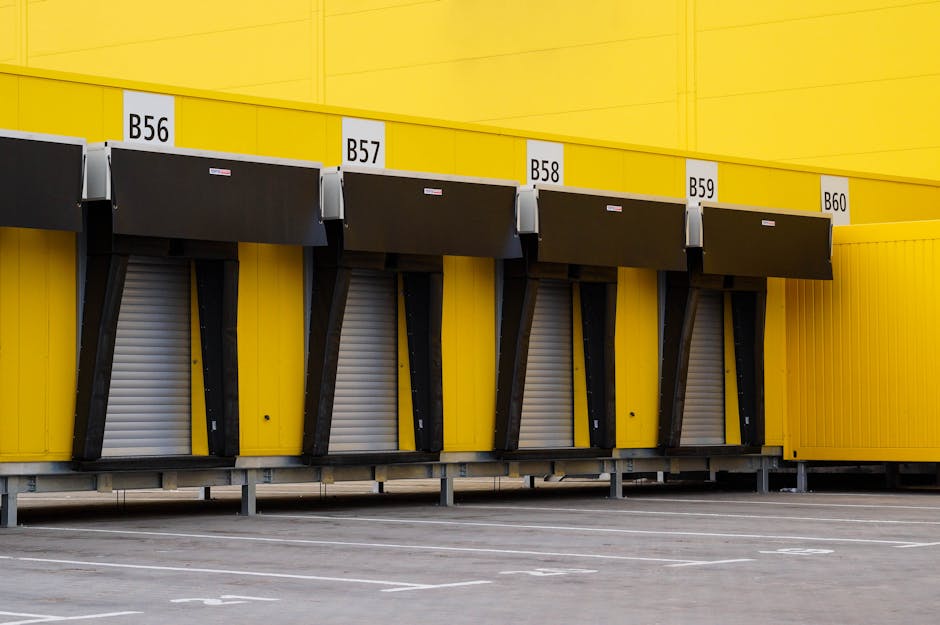
Access disputes: resolving loading bay problems in Earl's Court
If you have ever watched a van sit idle while someone argues over a loading bay, you will know how quickly a simple move can turn into a stressful stand-off. In Earl's Court, where narrow streets, busy pavements, shared building entrances and tight delivery windows are part of everyday life, access disputes can derail removals, office moves and furniture deliveries before the first box even leaves the building.
This guide explains Access disputes: resolving loading bay problems in Earl's Court in plain English. We will look at why these disputes happen, how they are usually handled, what good planning looks like, and how to reduce the chances of delays, damaged relationships, or surprise costs. If you are moving a flat, relocating an office, or arranging a one-off pickup, a bit of preparation goes a long way. Truth be told, it can save the day.
Whether you are a resident, property manager, business owner or move coordinator, the aim is the same: keep the vehicle where it needs to be, keep people calm, and keep the move moving.
Contents
- Why access disputes matter in Earl's Court
- How loading bay access problems are resolved
- Key benefits and practical advantages
- Who this is for and when it makes sense
- Step-by-step guidance
- Expert tips for better results
- Common mistakes to avoid
- Tools, resources and recommendations
- Law, compliance, standards and best practice
- Options, methods, and comparison table
- Case study or real-world example
- Practical checklist
- Conclusion
- Frequently asked questions
Table of Contents
- Contents
- Why Access disputes: resolving loading bay problems in Earl's Court Matters
- How Access disputes: resolving loading bay problems in Earl's Court Works
- Key Benefits and Practical Advantages
- Who This Is For and When It Makes Sense
- Step-by-Step Guidance
- Expert Tips for Better Results
- Common Mistakes to Avoid
- Tools, Resources and Recommendations
- Law, Compliance, Standards and Best Practice
- Options, Methods, or Comparison Table
- Case Study or Real-World Example
- Practical Checklist
- Conclusion
- Frequently Asked Questions
Why Access disputes: resolving loading bay problems in Earl's Court Matters
Loading bays are one of those things people barely think about until they need one. Then suddenly every minute matters. In Earl's Court, access is often the hidden bottleneck behind moving day problems because so many properties share space, entrances, or street frontage with neighbours, shops, hospitality venues, and local traffic.
An access dispute can happen when one party believes they have priority over a loading area and another party disagrees. Sometimes the issue is simple: a space is occupied, a bay permit was misunderstood, or a neighbour expected a different arrival time. Other times it is messier. The building manager says one thing, the driver says another, and the person moving is left standing on the kerb wondering why nobody seems to agree on the basics. Frustrating? Absolutely.
Why does it matter so much? Because a small access problem can cause a chain reaction:
- vehicles are forced to park farther away
- heavy items take longer to carry
- helpers get tired, which increases the risk of damage
- neighbours become irritated by blocked entrances
- business operations are interrupted
- extra waiting time can add cost
For homes, that might mean a sofa stuck outside in the drizzle while everyone negotiates. For offices, it can mean staff, desks, and equipment arriving late, with work halted for half a day. That is why resolving loading bay problems quickly is not just a nice-to-have. It is part of a smooth, professional move.
If you are planning a domestic move, you may also want to look at home moves and house removalists for broader relocation support. For lighter, flexible jobs in tight streets, a man and van or man with van setup can be particularly useful when access is awkward and timing needs to be tight.
How Access disputes: resolving loading bay problems in Earl's Court Works
There is no single magic fix, which is a bit annoying but true. Resolution usually starts with evidence, communication and practical compromise.
In a typical loading bay dispute, the parties involved may include:
- the resident or business receiving the delivery
- the driver or removal crew
- building management or concierge staff
- neighbouring occupiers who use shared access
- sometimes the local authority or enforcement officers, depending on the space
The process usually works in stages. First, somebody checks what the access arrangement actually is. That might involve looking at booking notes, permit details, building instructions, or the move plan. Next comes the on-the-ground reality check: is the bay occupied, too small, blocked by another vehicle, or unsuitable for the vehicle size? Then the people involved decide whether to wait, re-route, use a smaller vehicle, or shift the timing.
In practice, the best outcomes usually come from getting ahead of the problem before the van arrives. That means confirming:
- where the vehicle can stop legally and safely
- how long the loading bay can be used
- whether someone must be present to open gates or sign in
- what happens if another vehicle is already in the bay
- how quickly the team can move bulky items from door to vehicle
For larger commercial jobs, the stakes are higher. Office corridors, service lifts, shared courtyards and time-limited loading zones all create more points of friction. In those cases, services such as commercial moves and office relocation services are often chosen because they are built around coordination, timing, and business continuity rather than just transport.
There is also a simple truth many people learn the hard way: a van that is perfectly suitable for the job can still be the wrong vehicle for the access. That is where moving truck or removal truck hire may help in one scenario, while a smaller vehicle is the better fit in another. The right tool for the street, not just the job. That is the trick.
Key Benefits and Practical Advantages
Resolving loading bay problems early does more than prevent an argument. It improves the whole move from start to finish.
| Benefit | What it looks like in practice | Why it matters |
|---|---|---|
| Less waiting time | The crew can unload without circling the block | Reduces delays and keeps the schedule realistic |
| Lower stress | Everyone knows who is doing what and when | Calmer communication leads to better decisions |
| Safer handling | Items are carried shorter distances | Less fatigue, fewer bumps, lower damage risk |
| Better neighbour relations | Access is arranged rather than improvised | Less shouting, less tension, fewer complaints |
| Cleaner costs | Fewer surprise hold-ups or repeated trips | More predictable pricing and fewer knock-on issues |
One overlooked advantage is reputational. If you manage a property, or if you run an office, a tidy access plan makes you look organised. People notice. A smooth move feels boring in the best possible way. No drama, no kerbside debates, no last-minute panic.
There is another practical upside: better use of labour. If the access is clear, a team can focus on the move rather than fetching trolleys from odd angles or carrying awkward items around parked cars. And if you are moving a valuable item, say an antique cabinet or a heavy desk, every extra metre of carrying distance matters.
For people who need help with one-off furniture movement, a service like furniture pick-up can be a smart option when the goal is simply to collect and remove items without creating a street-level fuss.
Expert summary: The best loading bay solution is rarely the loudest one. It is the one agreed in advance, written down clearly, and flexible enough to adapt if the bay is occupied or the street is tighter than expected.
Who This Is For and When It Makes Sense
This topic is relevant to a wide range of people, not just removals companies. If access is part of the plan, the bay is part of the problem. Simple as that.
You will likely need this guidance if you are:
- moving out of or into a flat in Earl's Court
- organising an office relocation with tight building access
- booking a delivery or collection that needs kerbside stopping space
- managing a block of flats where residents share loading areas
- helping a family member move from a building with restricted access
- coordinating commercial stock, office furniture, or bulky equipment
- trying to solve a repeat issue with the same bay being blocked
It also makes sense if you have had one bad experience already. Maybe the crew arrived and found the bay occupied. Maybe a concierge had different instructions. Maybe another resident believed the bay was "theirs" because they had used it before. Let's face it, shared access areas can become surprisingly emotional.
If that sounds familiar, you are not alone. The fix is usually less about confrontation and more about process: confirm the access, communicate the window, and make the transport plan match the street reality. People often ask whether they need a large vehicle, a smaller one, or additional packing support. The answer depends on how long items must be carried and how easy the stop point is. For some moves, packing and unpacking services also reduce time pressure at the bay because items are ready to go faster.
Step-by-Step Guidance
If you want to reduce the chance of a loading bay dispute, treat access planning as part of the move itself, not as a side note. Here is a sensible way to do it.
- Confirm the exact access point. Do not assume the "front entrance" or "service road" will work. Identify the real stopping place, the route from vehicle to door, and whether there are gates, lifts or stairs involved.
- Check the time window. Many problems start when people assume they can stay as long as needed. Build the schedule around the shortest realistic loading period, not the ideal one.
- Match the vehicle to the street. A larger truck is not always better. In a tight Earl's Court street, a smaller vehicle may make the difference between a successful stop and a blocking issue.
- Share instructions early. Send the access details to everyone involved: movers, building staff, concierge, neighbours if relevant, and anyone waiting to receive the items.
- Prepare for a fallback. Ask what happens if the loading bay is occupied. Can the vehicle wait? Is there an alternative bay? Can a smaller vehicle be used temporarily?
- Keep the phone line open. On the day, access decisions sometimes need to be made in minutes. A quick call can avoid a thirty-minute argument in the rain.
- Record what was agreed. A short written note or message is often enough. It avoids the classic "I thought you said..." problem.
If you are arranging a local move with limited access, using a flexible service such as man with van can sometimes be the practical choice when space is tight and the job needs a nimble approach rather than a large footprint.
A useful rule of thumb: the more uncertain the access, the more important the planning. That sounds obvious, but people skip it all the time. Then they are surprised when the van cannot stop where they hoped. Not ideal.
Expert Tips for Better Results
Over the years, one pattern becomes clear. The best access outcomes are rarely the result of heroic last-minute effort. They come from small, boring habits done well.
- Walk the route before move day. If you can, stand at the entrance and look at the journey from bay to front door. Notice the kerbs, door widths, steep bits, and any pinch points.
- Time the move around local traffic patterns. Earl's Court can feel very different at 8:00 am than it does after lunch. A short delay can make access far easier.
- Use short, plain instructions. "Use the side entrance, ring the concierge, and wait by the yellow line" is better than a long paragraph nobody reads fully.
- Assign one decision-maker. Too many voices in a loading bay dispute can make a small issue much worse. One calm point of contact is usually enough.
- Keep bulky items ready first. Sofas, beds and wardrobes should not be left until the end unless there is a very good reason.
A tiny practical detail can help more than people expect: label the items that must come out first. A bright sticker on a box or a taped note on a wardrobe saves time when everyone is a little tired and the street is busy.
And do not be afraid to say no to a bad plan. If the bay arrangement is clearly unsafe, or the vehicle cannot fit without blocking traffic, pause and reset. That is not failure. That is good judgement.
Common Mistakes to Avoid
Most access disputes are not caused by one huge error. They come from a handful of small assumptions stacking up.
- Assuming the loading bay is free. This is the big one. Always confirm before the vehicle arrives.
- Not checking vehicle size. What looks fine in theory may be too long, too high, or too awkward for the turning space.
- Forgetting building rules. Some properties need advance notice, sign-in, or lift protection.
- Leaving it to the last minute. Access issues are much harder to fix once the crew is on site and everyone is watching the clock.
- Overloading the schedule. If the loading bay window is short, the rest of the day has to respect that fact.
- Using unclear language. "Use the back entrance" may mean different things to different people. Be specific.
There is also a more human mistake: assuming that if someone is annoyed, they are being unreasonable. Sometimes they are, to be fair. But often they are simply worried about parking, noise, blocked access, or a missed appointment. If you acknowledge the concern and offer a solution, things usually soften quickly.
If you are unsure which moving format fits your situation, comparing moving truck options with a more compact arrangement can help you avoid a mismatch before it becomes a street-level argument.
Tools, Resources and Recommendations
You do not need a complicated system to manage access disputes well. A few practical tools make the job easier.
- Site notes: a written summary of the entrance, bay, and contact person.
- Access photos: simple pictures of the street, gate, or bay can help the crew understand the layout.
- Time windows: a clear start and finish time for the loading period.
- Vehicle plan: whether you are using a van, truck, or smaller collection vehicle.
- Contact list: one number for the lead mover, one for the building contact, and one for the person receiving the goods.
For bigger or more structured jobs, it can help to combine transport and handling services rather than piecing everything together yourself. A coordinated move, especially in a dense area like Earl's Court, often benefits from a single plan rather than multiple disconnected bookings. That is where a full-service approach such as commercial moves or a tailored home-moving arrangement can reduce confusion.
It is also worth remembering that packaging matters. If items are packed in a rushed, awkward way, the loading bay becomes a bottleneck because the crew has to slow down to protect the contents. Straightforward packing makes access disputes less painful because the loading time drops. Simple, but effective.
Law, Compliance, Standards and Best Practice
This part needs careful wording. Access and loading bay arrangements can touch on parking rules, private property rules, building policies, lease conditions and local authority enforcement. Because these can vary, it is sensible to treat any specific rule as something to verify rather than assume.
Good practice usually includes:
- checking whether the bay is public, private, or managed by a building
- confirming any booking or permit requirement in advance
- avoiding obstruction of traffic, pavements, emergency access, or neighbour entrances
- making sure the vehicle is parked safely and legally for the job
- keeping clear communication with the property manager or on-site contact
From an operational point of view, best practice is about respect and proof. Respect the space, respect the neighbours, and keep a record of what was agreed. If a problem comes up later, that written trail can save everyone time. A quick message thread is often enough.
For businesses, there is also a duty of care angle. Repeated access problems can affect delivery reliability, staff time, and visitor experience. So while a loading bay dispute may seem minor in the moment, it can reveal a bigger planning weakness. Better to fix the pattern than firefight each time.
Options, Methods, or Comparison Table
There are several ways to handle access issues, and the best one depends on the building, the street, and the size of the job.
| Method | Best for | Strengths | Trade-offs |
|---|---|---|---|
| Pre-booked loading bay | Planned domestic or office moves | Predictable, organised, low drama | Requires good coordination and timing |
| Smaller van approach | Tight streets and short carry distances | Flexible, easier to place, often faster to position | May require more trips for larger loads |
| Large removal truck | Substantial household or commercial moves | Efficient for bigger volumes | Harder to place in restricted streets |
| Staged collection | Complicated access or shared buildings | Reduces pressure on the bay | Needs stronger planning and time management |
| Pack-first, load-fast approach | Time-limited access windows | Shortens on-site time | Requires disciplined packing before arrival |
There is no perfect option for every property. A townhouse, basement flat, and office floor all create different access patterns. In some cases, a straightforward man-with-van collection is enough. In others, the smarter route is a fully coordinated service that handles packing, vehicle choice and unloading order together.
Case Study or Real-World Example
Here is a realistic example based on the kinds of situations people face in Earl's Court.
A resident moving from a second-floor flat booked a standard vehicle and expected to use a shared loading bay outside the building. On the morning of the move, the bay was already occupied by another delivery van. The resident had assumed the booking was enough on its own, but the building manager expected a separate confirmation the day before. Tempers started to rise. You could almost feel the tension in the air.
Instead of forcing the issue, the moving team paused, called the building contact, and reviewed the route. They found a short alternative stop point nearby and switched to a shorter carry for the first part of the move. The heaviest items were shifted first once the bay became available. It was not glamorous, and nobody would call it exciting, but it worked.
The lesson? The plan did not need to be perfect. It just needed a backup. That one adjustment saved the client from a long delay and kept the neighbours from being dragged into a bigger dispute. A bit of patience, a bit of flexibility, and the whole day improved.
Practical Checklist
Use this checklist before move day. It is basic, but it catches a lot.
- Confirm the loading bay location in writing
- Check the access window and any booking rules
- Tell the building contact the arrival time
- Match the vehicle size to the street and entrance
- Prepare alternative parking or waiting options
- Make sure keys, fobs, and entry instructions are ready
- Label the items that must be loaded first
- Keep one main contact person available by phone
- Brief the crew on stairs, lifts, and carry distance
- Check whether packing support would reduce loading time
- Allow for a small delay buffer if the area is busy
- Keep a note of what was agreed in case of confusion later
If you are dealing with a larger property or want a more coordinated approach, it can also help to review transport choices such as removal truck hire alongside your access plan, rather than treating them as separate decisions.
Conclusion
Access disputes are rarely about one single bad decision. More often, they come from unclear arrangements, shared assumptions, and the pressure of doing too much in too little space. In Earl's Court, where streets can be busy and loading areas are often limited, the safest route is to plan access as carefully as the move itself.
If you remember only one thing, make it this: the right access plan is the one that fits the street, the building, and the timing. Not the one that looks best on paper. Once that shifts in your mind, a lot of moving-day stress starts to disappear.
Get a free quote today and see how much you can save.
And if the bay feels like a battle waiting to happen, take a breath. Most access problems can be solved with calm communication, a flexible plan, and a little local know-how. That really does go a long way.
Frequently Asked Questions
What causes loading bay disputes in Earl's Court?
Most disputes come from unclear booking arrangements, occupied bays, different interpretations of building rules, or vehicle size mismatches. Sometimes the issue is simply that everyone expected someone else to sort it out.
How can I stop a loading bay problem before move day?
Confirm the access point, time window, vehicle size, and building contact in writing. A quick walk-through or photo of the entrance can also prevent misunderstandings.
Do I need a larger truck or a smaller van?
It depends on the street, the amount being moved, and how easy it is to stop close to the entrance. In tight areas, a smaller vehicle can be much more practical, even if it means a slightly different loading plan.
Can a loading bay be used without a permit?
That depends on whether the bay is public, private, or building-controlled. Always check the specific arrangement before the vehicle arrives rather than assuming it is available.
What should I do if another vehicle is already in the bay?
Stay calm, contact the building or site manager, and see whether there is an alternative stop point or a short delay that will resolve it. Forcing the issue usually makes things worse.
Are office moves more difficult than home moves when access is tight?
Often, yes. Offices can involve more equipment, more people, and stricter timing. That said, a well-planned office move can still go smoothly if the access details are handled early.
How does packing affect loading bay problems?
Poor packing slows everything down. If items are ready to go, the crew spends less time at the bay, which lowers the chance of conflict and reduces pressure on the schedule.
What if the building manager and the mover disagree?
First, refer back to the written instructions or booking notes. If that does not settle it, focus on safety and practical alternatives rather than turning it into a point-scoring exercise.
Is a man and van service suitable for awkward access?
Often it is, especially for lighter or medium-sized moves where flexibility matters more than capacity. It can be a sensible choice when a larger vehicle would create more access trouble than it solves.
Can access disputes add extra cost?
They can, mainly through waiting time, repeated trips, or the need to reschedule. The best way to reduce the risk is to plan the bay access properly and build in a little flexibility.
What is the best way to handle shared access in a block of flats?
Clear communication helps most. Let the building team know the move window, confirm the bay, and make sure residents or neighbours who may be affected are informed where appropriate.
Where can I get help with a move that has tricky access?
Look for a service that understands local access, can advise on vehicle choice, and is comfortable working around tight timing. For an introduction to the company and how they work, you can review the about us page or use the contact us page to ask about your specific situation.
If you would like to understand how your information is handled, the privacy policy and terms and conditions pages are also available for reference.